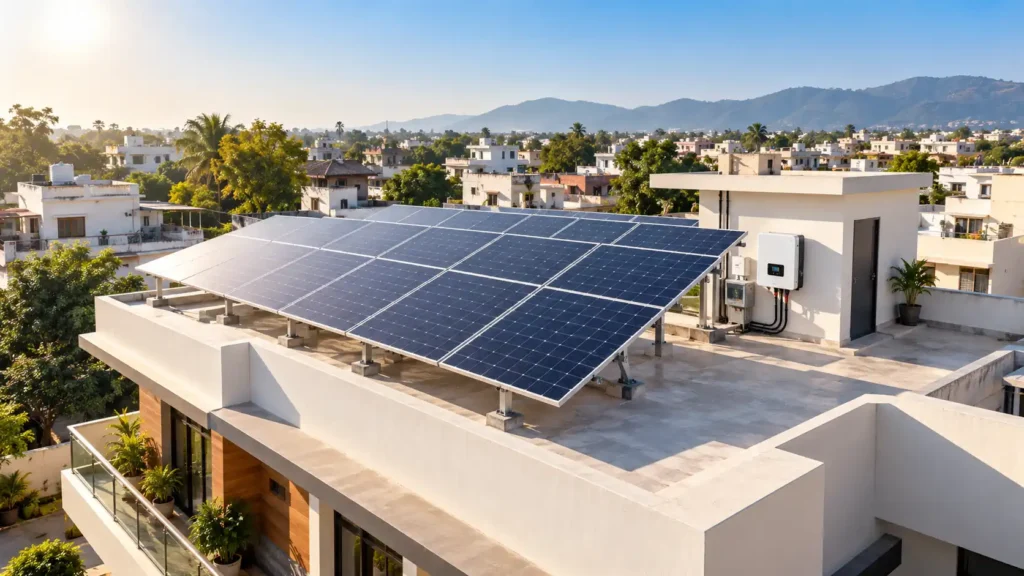
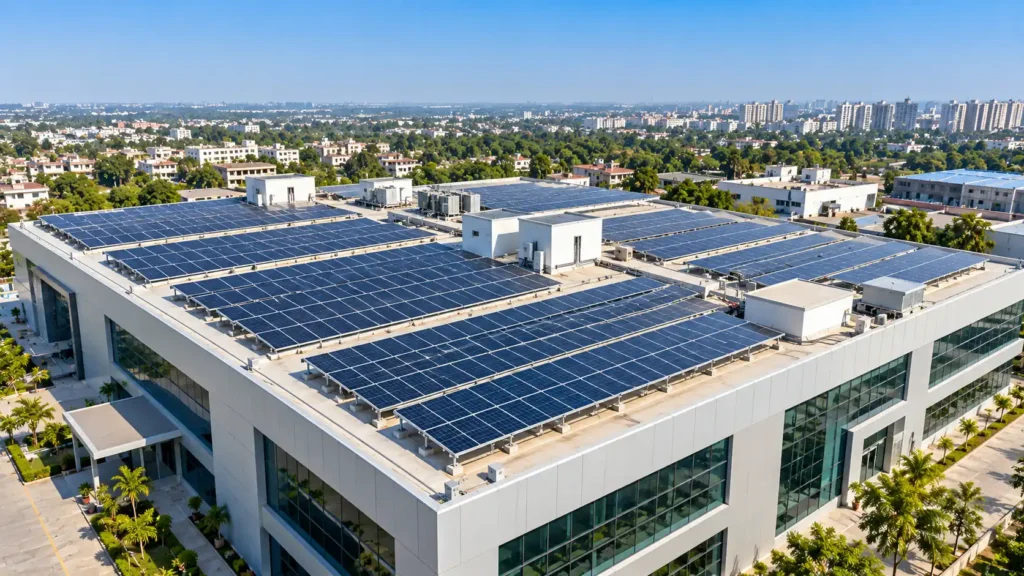
Electricity tariffs across Uttarakhand are going up every year. If you live in Haldwani, Dehradun, Roorkee, or anywhere in the Kumaon and Garhwal regions, your UPCL domestic power bill probably sits between ₹2,500 and ₹6,000 every month. Paying ₹6.50 per unit adds up quickly, especially during summer months when ACs run nonstop or winters when geysers stay on all day.
The central government’s PM Surya Ghar Muft Bijli Yojana changes the math completely. Because Uttarakhand is classified as a Special Category State, residential properties qualify for higher subsidy slabs than most of the country. On a standard 3 kW system, you can claim up to ₹85,800 in direct government support.
This guide breaks down how the subsidy works in Uttarakhand, what a setup actually costs out of pocket, and the exact steps to get your net meter approved by UPCL without getting stuck in red tape.
How the PM Surya Ghar Subsidy Works in Uttarakhand
The subsidy amount depends on the capacity of the inverter and panel array you install on your roof. Under the Special Category classification for Uttarakhand, the central and state subsidy rates break down as follows:
- 1 kW System: ₹33,000 fixed subsidy
- 2 kW System: ₹66,000 fixed subsidy
- 3 kW System: ₹85,800 total subsidy
- Above 3 kW (Up to 10 kW): Capped at ₹85,800 maximum for residential setups
If you put up a system larger than 3 kW—say 5 kW for a large family home or a duplex in Dehradun—the subsidy stays capped at ₹85,800. The extra capacity still cuts your bill further, but the government subsidy portion tops out at 3 kW.
Real Cost Breakdown: What You Pay Out of Pocket
Let’s look at a realistic cost calculation for a standard 3 kW residential rooftop system in Uttarakhand in 2026.
| Cost Head | Amount (₹) |
| Gross System Cost (3 kW On-Grid) | ₹2,00,799 |
| PM Surya Ghar Subsidy Discount | − ₹85,800 |
| Net Out-of-Pocket Investment | ₹1,14,999 |
What Does a 3 kW System Actually Produce?
- Daily Generation: 11 to 13 units (kWh) per day on average over the year.
- Monthly Output: Roughly 330 to 380 units.
- Monthly Savings on UPCL Bill: ₹2,100 to ₹2,450 every month.
- Rooftop Space Needed: 220 to 250 sq ft of shadow-free area.
If your average monthly UPCL bill is around ₹3,000, a 3 kW plant wipes out over 80% of your bill. The net investment of ₹1,14,999 pays for itself in less than 4 years. After that, the system runs on profit for the remaining 20+ years of the panel warranty.
Step-by-Step Guide to Applying for the Subsidy in Uttarakhand
Getting your subsidy credited directly to your bank account requires following a strict national portal procedure alongside UPCL site approvals. Here is the exact process we follow for every client.
Step 1: Portal Registration
Register on the official national portal (pmsuryaghar.gov.in). You need three things ready:
- Your UPCL electricity connection number (found on your monthly paper bill).
- Your active mobile number linked to Aadhaar.
- Your district and local DISCOM division details.
Step 2: Feasibility Approval from UPCL
Once you apply on the portal, your local UPCL divisional office receives a technical feasibility request. UPCL engineers verify if the local transformer in your neighborhood has enough capacity to accept solar power feedback. This approval usually takes 3 to 7 working days.
Step 3: Choosing an Empaneled Vendor and Hardware Selection
You cannot buy cheap unrated panels off the market and claim the government subsidy. MNRE rules require:
- ALMM-Listed Panels: Modules must be sourced from the Approved List of Models and Manufacturers (mono-PERC or TopCon panels).
- Made in India (DCR): Cells must be manufactured domestically to qualify for residential subsidies.
- Empaneled Installer: The physical installation must be signed off by a registered vendor on the national portal.
Step 4: Installation and Structure Erection
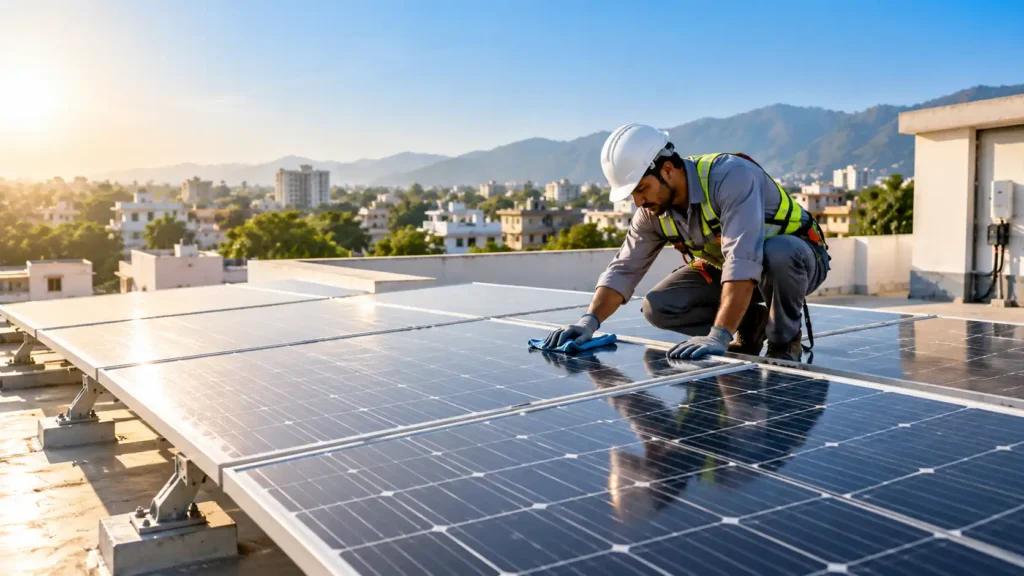
Our engineering team installs the hot-dip galvanized mounting structure, fastens the solar panels, mounts the BIS-certified smart inverter, and completes all AC/DC wiring with proper earthing pits and surge protection.
Step 5: UPCL Net-Meter Inspection and Commissioning
After installation, we submit the work completion report and solar module serial numbers on the portal. A UPCL technician visits your property to inspect the installation, test the anti-islanding safety feature on the inverter, and replace your old electric meter with a bi-directional net meter.
Step 6: Direct Subsidy Transfer (DBT)
Once the net meter is commissioned and UPCL updates the system status on the portal, you submit your bank account details and a cancelled cheque online. The subsidy amount of ₹85,800 is transferred directly to your bank account within 30 days.
Common Obstacles in Uttarakhand and How to Avoid Them
Installing solar in Uttarakhand comes with terrain-specific challenges that flat-land guides usually ignore.
1. Roof Shading in Hill Terrains
If your property sits near hill slopes or has trees surrounding it in places like Nainital or Mussoorie, morning or late afternoon sun exposure might be cut short. A shading test before installation is critical. If 30% of your array sits in shadow during peak midday hours, output drops significantly. Microinverters or string optimizers help solve partial shading issues.
2. High Wind Loads
Homes in open valley areas like Haldwani, Kotdwar, or Haridwar experience heavy wind gusts during pre-monsoon storms. Standard lightweight aluminum mounting legs can bend or rip out from the roof slab. We anchor heavy-duty hot-dip galvanized steel frames directly into the concrete roof using chemical fasteners rated for 150+ km/h winds.
3. Net-Meter Delay
The biggest headache for homeowners is the gap between installation completion and net-meter installation by UPCL. If your installer doesn’t submit clean paperwork or module serial numbers immediately, your file gets stuck at the sub-division office. Working with a vendor who manages local UPCL liaison directly avoids these multi-week delays.
Is Your Property Eligible?
To get the full ₹85,800 subsidy, your site must meet these basic criteria:
- You must have an active residential UPCL electricity connection in your name or an immediate family member’s name.
- You need ownership rights or clear permission to use the rooftop slab or tin shed.
- The roof must support at least 200–250 sq ft of open, unshaded space facing south or south-west.
- Commercial connections, hotels, and agricultural setups are not eligible for the residential PM Surya Ghar subsidy, though they can claim accelerated depreciation benefits instead.
Next Steps for Your Rooftop
If you want to cut your UPCL bill down to the bare minimum grid connection charge, starting with a site survey is the first practical step. An engineer checks your roof orientation, verifies structural strength, checks transformer capacity on your street, and calculates your exact payback period before you spend a single rupee.